

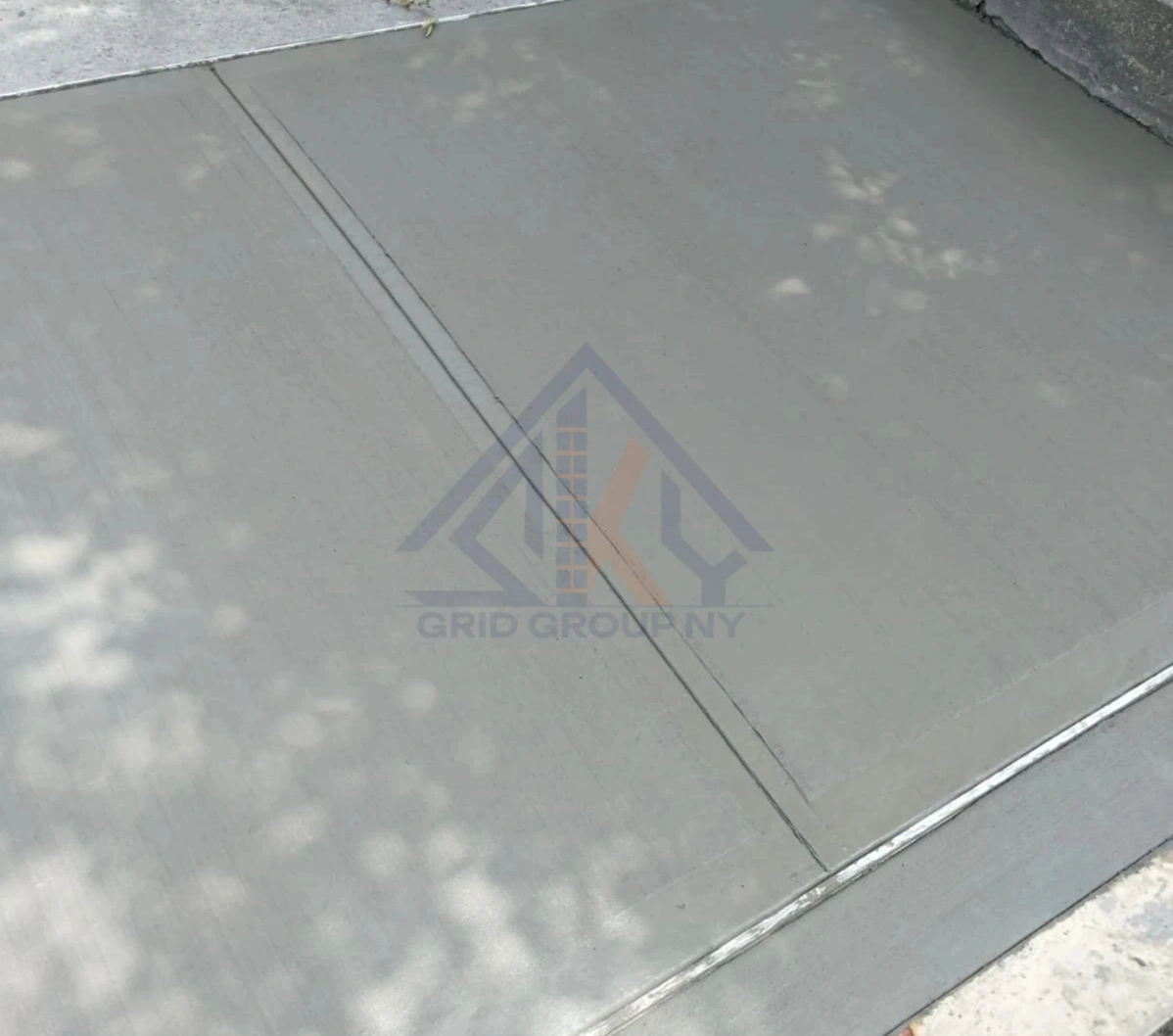
Section 19-152 of the NYC Administrative Code is the law behind every sidewalk violation notice. It makes the owner of a property responsible for repairing the sidewalk flags in front of it, sets out which defects DOT can cite, and spells out what happens if you don't fix them: the city does the work, bills you, and the bill becomes a lien.
It is not the law that makes owners liable when someone gets hurt. That's a separate section, § 7-210, and the two are often confused. This guide covers what 19-152 says, subdivision by subdivision, and what it means for an owner holding a notice.
Section 19-152 at a Glance
| Subdivision | What it covers |
|---|---|
| a | The owner's duty to repair sidewalk flags, and the nine defects that count |
| a-1 | Defects found in city construction projects or reported to DOT, and when they count as hazards |
| b | Work must follow DOT specifications |
| c | What a violation order must contain, the 75-day minimum, and reinspection |
| d | The 10-day deadline for immediate dangers |
| e | What happens if you miss the deadline, the 20 percent cap, and the lien |
| f and g | How notices are served and filed with the county clerk |
| i | The bill, the notice of account, and the rule that you only pay for flags ordered |
| j and k | Interest after 90 days, and foreclosure like a tax lien |
| l | The city's right to sue the owner |
| m | The four-payment installment plan |
| r | DOT's duty to keep records and publish reports |
What the Law Requires (Subdivision a)
The owner of any real property has to install, construct, repave, reconstruct, and repair the sidewalk flags in front of or next to the property, at their own cost. That includes the intersection quadrant on a corner property.
The same subdivision covers vacant lots. When DOT orders it, the owner has to fence a vacant lot, fill a sunken lot, or cut down a raised one.
Three limits protect owners:
- DOT orders repairs only after a DOT inspector has inspected the property.
- DOT can't order an owner to repair a flag that the city, its agents, or a city contractor damaged during a city capital construction project.
- DOT can direct repair of only the flags that have a substantial defect, not the whole sidewalk.
All work has to follow DOT's specifications and regulations (subdivision b).
The Nine Substantial Defects
A flag can be ordered replaced only if it has one of these. DOT measures them, so a flag that looks old but meets none of them isn't citable.
| # | Defect | In plain English |
|---|---|---|
| 1 | Missing flag | A flag is gone, or the sidewalk was never built |
| 2 | Severe cracking | The flag is cracked enough that pieces could come loose or be removed |
| 3 | Undermined or loose flag | There's a visible void underneath, or the flag rocks or seesaws |
| 4 | Trip hazard | Neighboring flags differ in height by one half inch or more, or a surface defect is at least 1 inch across in every direction and at least one half inch deep |
| 5 | Improper slope | The flag holds water instead of draining to the curb, must be replaced for drainage, or has a cross slope beyond standards |
| 6 | Hardware defects | Hardware sits more than 1/2 inch from flush, or a cellar door deflects more than 1 inch, isn't skid resistant, or is unsafe |
| 7 | Structural integrity | A flag shares a non-expansion joint with a defective flag, and a crack runs from that joint to one other joint |
| 8 | Non-compliance with DOT specs | The flag wasn't built to DOT specifications |
| 9 | Patchwork | A less-than-full-depth repair, or a flag made partly or wholly of asphalt or other unapproved material |
Two details matter in practice.
Patching doesn't count as a repair. Partial repairs are a defect of their own. The code carves out patchwork left by canopy poles, meters, light poles, signs, and bus stop shelters, unless that patch is also one of the first eight defects.
One bad flag can pull in its neighbor. Defect 7 is how a flag that looks fine ends up on the list. For the full picture of what causes each defect, see our guide to sidewalk repair.
Hazards and the prior notification program (subdivision a-1)
Owners also pay for substantial defects found during a city capital construction project, or through DOT's prior notification program, where DOT is told about a defective flag by a member of the public or one of its own employees.
For defects that come in through the prior notification program, the sidewalk has to be deemed a hazard before DOT can issue a violation. Hazards are the more serious conditions: a missing flag, severe cracking, an undermined flag with a visible void, a rocking flag, a half-inch height difference or deep surface defect, or a dangerous cellar door.
How a Violation Works (Subdivisions c, f, and g)
A violation order has to include specific things. If yours is missing them, that's worth raising.
| The order must include | Why it matters |
|---|---|
| A detailed explanation of the inspection | Shows what the inspector found |
| A diagram of the property with defects marked by flag and type | Shows exactly which flags you're responsible for |
| The work to be performed | Defines the repair |
| An estimate of the cost of the repair | Lets you compare against a private quote |
| A deadline of at least 75 days | Your window to fix it |
| Your appeal rights, including reinspection and the Comptroller's notice of claim | Tells you how to challenge it |
Service. DOT serves the order on the owner or their managing agent in person, or by certified or registered mail with return receipt, using the owner of record on the city collector's books. If someone else is designated to get the tax bills, they get a copy too. If the owner refuses delivery, DOT can serve by ordinary mail and post it on the property.
Filing. A copy of the notice is filed with the county clerk, along with proof of service. That's what puts the violation on the property record, and it's why a sale or refinance can turn up an open one.
The Deadlines (Subdivisions d and e)
There are two clocks.
| Deadline | When it applies |
|---|---|
| 75 days | The standard deadline for a substantial defect. It's also the minimum DOT can give |
| 10 days | When DOT has been notified in writing of a defective, unsafe, dangerous, or obstructed sidewalk and decides it's an immediate danger to the public |
DOT's own guidance says the 75 days begins when the owner receives the notice, as shown on the certified mail receipt. If you receive more than one notice, the newest replaces the earlier ones.
The permit grace clause. Subdivision e says an owner is considered compliant if they get a permit from DOT within the time in the order and finish the work within ten days afterward. DOT's guidance, though, says a sidewalk permit doesn't extend the 75 days. The safe approach is to treat 75 days as the real deadline, finish inside it, and not plan around the grace period. We cover that deadline in what happens after 75 days.
When the City Does the Work (Subdivisions e, i, j, and k)
If the deadline passes, DOT can do the repair itself, and the code sets out how the bill works.
| Step | What the code says |
|---|---|
| The charge | The cost of the work plus administrative expenses, capped at 20 percent of the cost of performance |
| The lien | When the city collector enters the charge, the debt becomes a lien on the property ahead of all other liens and encumbrances except taxes |
| The notice | The city collector mails a notice of account within five days of the entry |
| What you owe | Only the flags ordered, not the entire sidewalk if the rest is sound |
| Interest | Starts if the charge isn't paid within 90 days, and runs from the date of entry |
| Collection | Handled the same way as unpaid taxes, sewer rents, and water charges, including foreclosure |
| Lawsuit | The city can also sue the owner for the charge |
Interest follows two rules. For most properties it's the rate the city charges on late real property taxes under § 11-224. For parcels with an annual tax of $2,750 or less, other than vacant or unimproved land, it's the lesser of the city's certified cost-of-debt rate or 8.5 percent. The Department of Finance sets the current rate, so check your bill.
The lien's priority is the part many owners miss. A sidewalk charge sits ahead of mortgages and most other liens, which is why lenders and title companies want it cleared before closing.
There's no fine in this process. DOT's own guidance says a violation carries none. The cost shows up when the city performs the repair.
The Installment Plan (Subdivision m)
Some owners can spread the bill over four annual payments.
| Requirement | Detail |
|---|---|
| Who qualifies | Owners of a one- to six-family house, or property assessed at $30,000 or less |
| Charge amount | More than $250 but no more than $5,000 |
| Payments | Four annual installments, as equal as possible |
| First payment | Due when the application is approved |
| Interest | The lesser of the cost-of-debt rate or 8.5 percent per year |
| Default | Missing a payment by more than 30 days can void the agreement |
| Lien enforcement | The city can't enforce the lien while you aren't in default |
The Department of Finance's form says to apply within one year of the charge. You can apply through Finance or 311.
Reinspection and Appeals
If you think the order is wrong, subdivision c gives you a path.
- Request a reinspection through the borough office. A different inspector does it, without access to the first inspector's report, and gives you at least five days' notice of the date where appropriate.
- Get a new order. The new report and order replace the earlier one, with a new diagram.
- Appeal the bill or the work. Under §§ 19-152.2 and 19-152.3, you can file a notice of claim with the Comptroller's office and then petition to review the account or the quality of the work.
DOT's page adds that you should request a reinspection within 75 days of receiving the notice. DOT schedules it within 180 days of the request, and the result is final.
19-152 vs. 7-210
These two sections are often mixed up, and the difference matters.
| § 19-152 | § 7-210 | |
|---|---|---|
| What it does | Requires owners to repair flags, and sets the violation, billing, and lien process | Makes owners liable for injuries caused by failing to keep the sidewalk reasonably safe |
| Who enforces it | DOT | Injured pedestrians, through lawsuits |
| Who it applies to | Owners of property next to a sidewalk | Same, with an exemption |
| Exemption | None for the repair duty | Owner-occupied one-, two-, and three-family homes used only as residences |
| Consequence | A repair order, and a city bill and lien if ignored | A personal injury claim |
An owner-occupied one-, two-, or three-family home is exempt from tort liability under § 7-210. It's not exempt from a DOT violation under § 19-152. Homeowners still receive notices and bills.
What 19-152 Doesn't Cover
- Curbs. The section refers to sidewalk flags. Curbs are treated differently. See who's responsible for curb repair.
- City-damaged flags. DOT can't order you to repair a flag the city damaged during a capital construction project.
- City tree damage. DOT's current policy is to stop issuing violations and liens on one-, two-, and three-family properties when a city street tree is the sole cause of the damage.
- Fines. There's no fine for the violation itself.
What the Numbers Look Like
| Stat | Figure | Source |
|---|---|---|
| Miles of sidewalk in NYC | More than 12,000 | NYC DOT |
| Sidewalk the city replaces each year | More than 2 million sq ft | NYC DOT |
| Standard deadline | 75 days | § 19-152(c) and (e) |
| Immediate danger deadline | 10 days | § 19-152(d) |
| Administrative charge cap | 20 percent | § 19-152(e) |
| Days to pay before interest | 90 | § 19-152(j) |
| Sidewalk injury claims against the city, FY2023 | 2,350 | NYC Comptroller |
| Paid to settle those claims, FY2023 | $53.5 million | NYC Comptroller |
Those last two are claims against the city, which mostly concern city-owned property. The Comptroller's report has the detail. Subdivision r also requires DOT to keep records of complaints and reinspections and publish a report for at least three years.
A Real Example: How a City-Billed Repair Plays Out
A PIX11 report followed homeowners on Bushwick Avenue who were cited after a 2018 inspection. The city's contractor did the work, and the charges appeared on their November 2020 property tax bills. One homeowner was billed just over $2,200. A neighbor, whose sketch marked nine squares, was billed $3,121.
It shows the code in action: a notice, a deadline, a city repair, a bill that arrives long after the work, and a charge on the tax bill.
What Owners Should Do
- Read the diagram. You owe only the flags marked on it.
- Compare the cost estimate in the order against a private quote.
- Check the deadline, counting from the date you received the notice.
- Request a reinspection if the order doesn't match your sidewalk.
- Pull the permit and use a contractor who builds to DOT specifications. Patching won't clear the notice.
- Request the dismissal inspection through 311 when the work is done, and confirm the record is cleared.
- Keep the paperwork from the permit, the repair, and the inspection.
For a starting number on the concrete, try our free estimate calculator.
Sidewalk Repair Across the Boroughs
Section 19-152 applies citywide, but the repairs differ block by block. Sky Grid Group NY works in Brooklyn, Queens, the Bronx, and Manhattan, and is licensed by DOT, DOB, and DCWP.
Frequently Asked Questions
What is NYC Administrative Code § 19-152?
The section that requires property owners to repair the sidewalk flags in front of their property and sets how DOT cites defects, bills owners when the city does the repair, and places a lien for unpaid charges.
Who is responsible for the sidewalk under § 19-152?
The owner of the property in front of the sidewalk, at their own cost. That includes the intersection quadrant on a corner property.
What counts as a substantial defect?
Nine conditions: a missing flag, severe cracking, an undermined or rocking flag, a trip hazard of one half inch or more, improper slope, hardware defects, a structural-integrity defect through a shared joint, non-compliance with DOT specifications, and patchwork.
How long do I have to fix a violation?
At least 75 days. If DOT decides a defect is an immediate danger, the deadline is 10 days.
What happens if I miss the deadline?
DOT can do the repair and charge you for it, plus administrative expenses of up to 20 percent. The charge becomes a lien ahead of all other liens except taxes, and interest starts if it isn't paid within 90 days.
Is there a fine under § 19-152?
No. DOT says a violation carries no fine. The cost comes from the repair, the administrative charge, and interest on an unpaid city bill.
What's the difference between § 19-152 and § 7-210?
19-152 requires owners to repair sidewalks and sets the violation and billing process. 7-210 makes owners liable for injuries caused by an unsafe sidewalk. Owner-occupied one-, two-, and three-family homes are exempt from 7-210 liability but not from 19-152 violations.
Do I have to pay for the whole sidewalk?
No. The code says an owner pays only for the flags DOT ordered repaired, not an entire sidewalk that has no other defects.
Can I pay a city sidewalk bill in installments?
Some owners can. Owners of one- to six-family houses, or property assessed at $30,000 or less, can ask to pay a charge between $250 and $5,000 in four annual installments.
How do I challenge a violation?
Ask for a reinspection by a different inspector. If you still disagree with the bill or the work, you can file a notice of claim with the Comptroller's office and then petition for review.
Need Help With a 19-152 Violation?
If you've received a sidewalk violation, or the city has billed you for a repair, get a free estimate or call (718) 814-1129. We'll go through the diagram, tell you which flags actually need work, and build to DOT specifications.