Building Strong Foundations Across New York City

Helping property owners with their projects, solving issues efficiently, and delivering dependable, high-quality construction service.

Building Strong Foundations Across New York City
Helping property owners with their projects, solving issues efficiently, and delivering dependable, high-quality construction service.
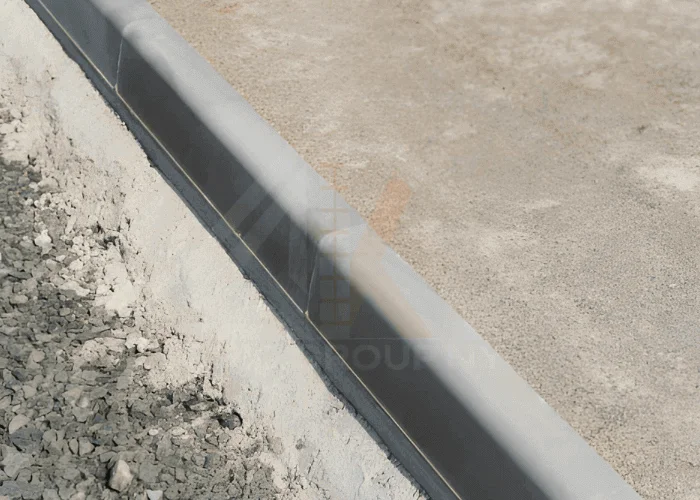
Yes, generally. In New York City, the curb is legally part of the roadway, not the sidewalk, and the Department of Transportation is responsible for inspecting, repairing, and replacing it. That's the opposite of how sidewalk flags work, where the adjacent property owner is on the hook.
There are exceptions, and knowing them matters, since "not technically my repair" doesn't always mean "not my problem."
The city owns curb repair in most cases. Property owners own sidewalk repair in nearly all cases. That split comes from how NYC's own code classifies the two.
| Sidewalk Flags | Curbs | |
|---|---|---|
| Who's responsible | Property owner | City (DOT), in most cases |
| Legal basis | NYC Admin Code § 7-210 and § 19-152 | Curb classified as part of the roadway |
| Who pays for routine repair | Owner | City |
Sidewalk flags sit on what's legally the owner's maintenance responsibility, even though the land itself is city property. That shift happened in 2003, when the city moved liability for sidewalk condition onto adjacent owners.
Curbs never got the same treatment. They're classified as part of the street, the same category as the roadway surface itself, so DOT keeps both the responsibility and the cost of fixing them.
The general rule has real exceptions, and they come up often enough to matter:
Outside of those situations, a curb that's simply cracked, chipped, or sunken from ordinary wear is the city's repair.
Reporting a city-owned curb is straightforward: call 311 or file through the NYC 311 website with the exact address. DOT sends an inspector to evaluate the damage and determine next steps.
There's no guaranteed timeline once it's reported. A damaged curb can sit on a repair list for a while before a crew gets to it, which is the main reason this exception matters in practice even though it's not a legal obligation.
A damaged curb doesn't stay contained to the curb. It changes how water drains across the sidewalk next to it, and standing water accelerates cracking in the concrete you are responsible for. What starts as a city problem can show up on your own sidewalk inspection within a season or two.
That's why many property owners choose to address curb repair alongside sidewalk work rather than wait on the city, even though nothing requires it. Bundling both into one job, with one contractor and one mobilization, is often simpler and faster than coordinating a city repair on its own timeline.
A curb cut, where a section is lowered for a driveway, is treated differently from a standard curb. It's a modification made for the property's benefit, so maintaining it generally falls to the owner, and installing or altering one requires its own permit.
If you're not sure whether a specific section of curb falls under the general rule or an owner exception, that's a judgment call worth getting from someone who's looked at the actual installation, not a guess from the sidewalk.
Generally yes. Curbs are classified as part of the roadway, and NYC's Department of Transportation is responsible for inspecting and repairing them in most cases.
Whoever caused the damage. If a private contractor or delivery vehicle damaged a curb during work at a property, the repair cost typically falls on that party, not the city.
Often yes, for the modified section. A curb cut made for a driveway is generally the property owner's responsibility to maintain, unlike a standard, unmodified curb.
Call 311 or file a report through the NYC 311 website with the property's exact address. DOT will send an inspector to evaluate it.
There's no fixed timeline. Reported curb damage goes into a repair queue, and how quickly it gets addressed depends on DOT's current workload in that area.
Yes, property owners often choose to handle curb repair privately, especially alongside sidewalk work, rather than wait on the city's schedule. It isn't required, but it's allowed.
Whether a curb is damaged, undermined, or just overdue for attention, get a free estimate or call (718) 814-1129. We'll tell you honestly whether it's the city's repair or yours, and handle either one.