

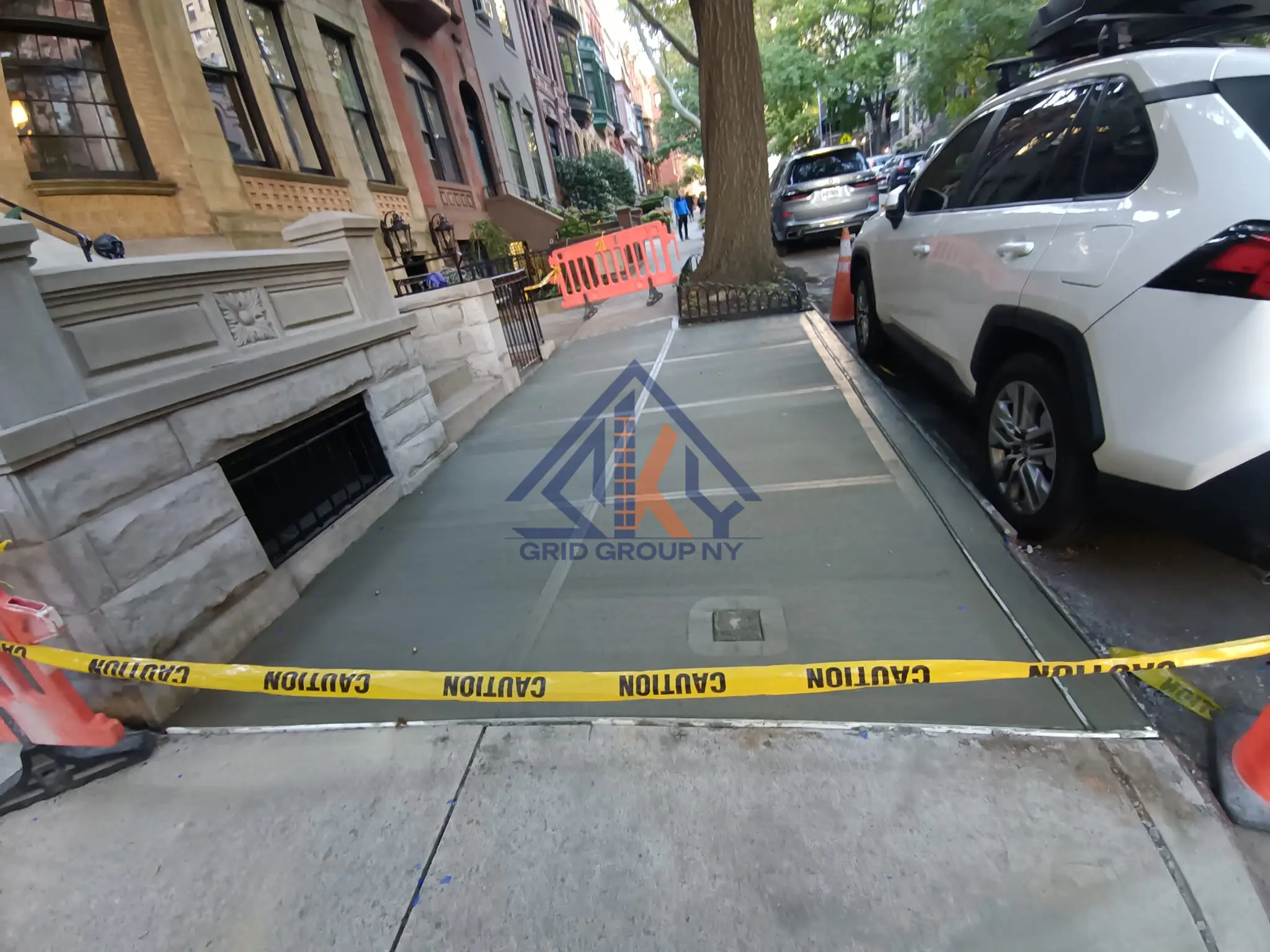
A DOT sidewalk violation on a tree-lined Harlem block usually means more than broken concrete. At 136 W 131st St, mature street tree roots, decades of weather, and everyday foot traffic had damaged 8 sidewalk flags in front of a three-story brick row house. We replaced all 8 flags in about two days on-site for roughly $6,700, permits included, after sorting out the DOT and tree-related approvals the job needed. Here's how the project came together and what other Central Harlem owners can learn from it.
Get a Free Estimate Get a Free EstimateThe West 131st Street Project at a Glance
| Detail | Info |
|---|---|
| Location | 136 W 131st St, New York, NY 10027 |
| Neighborhood | Central Harlem, Manhattan |
| Property type | Three-story brick residential row house with full basement, built 1910 |
| Issue | NYC DOT sidewalk violation; flags damaged by mature tree roots, weather exposure, and wear |
| Scope | Removal and replacement of 8 deteriorated sidewalk flags along the frontage |
| Approvals | DOT Sidewalk Construction/Repair Permit, NYC Parks Tree Work Permit, Sidewalk Closing Permit, 811 utility mark-out ticket |
| Estimated cost | About $6,700, including permit costs |
| On-site time | About two days once permits and authorizations were in place |
What Was Wrong With This Harlem Sidewalk
West 131st Street between Lenox Avenue and Adam Clayton Powell Jr. Boulevard is lined with century-old row houses and large, established street trees. That combination gives the block its character, but it also puts steady pressure on the concrete out front.
At this property, three forces were working on the sidewalk at once. Roots from a mature street tree had pushed up sections of the frontage, freeze-thaw cycles had widened cracks over many winters, and years of daily foot traffic had worn down the surface. The result was 8 flags with cracking, uneven edges, and raised sections that created trip hazards along the walkway.
The mix of causes matters more than many owners realize. According to NYC DOT, the City no longer issues sidewalk violations to one-, two-, and three-family properties when the damage is caused solely by City trees, and DOT inspects only sidewalk conditions not caused by tree roots. When roots are just one factor alongside weathering and general wear, the sidewalk can still fall under the standard DOT violation process, which is the situation this owner faced.
Starting With the Violation Paperwork, Not the Concrete
Before pricing the job, we went through the Notice of Sidewalk Violation and the Preliminary Inspection Report that came with it. That sketch is the real scope of work. DOT states that every flag marked with a number on the Preliminary Inspection Report must be replaced and every defect corrected. Patching a cracked corner or grinding down a raised edge won't satisfy a marked flag.
The report also starts the clock. DOT gives owners 75 days to make repairs after the notice is received, counted from the certified mail receipt or, if the notice was posted, from the posting date. If the owner doesn't act in time, DOT may send its own contractor, and the Department of Finance will bill the owner under Section 19-152 of the Administrative Code, and that unpaid bill can become a lien on the property.
One detail that catches owners off guard: pulling a sidewalk permit does not extend the 75-day window. The permits had to move quickly.
Approvals Lined Up Before Demolition
DOT Sidewalk Construction Permit
Every repair under a DOT violation needs a sidewalk permit. DOT currently charges $70 for every 300 linear feet of sidewalk for any one property, so a single permit easily covered this row house frontage.
NYC Parks Tree Work Permit
Because tree roots contributed to the damage, the work near the tree had to account for NYC Parks rules. Cutting street tree roots without authorization is not allowed, and a Parks forester can recommend repair methods that protect the tree. According to NYC Parks, Tree Work Permits are typically issued within 45 days and come with guidelines for rebuilding the sidewalk without harming the tree. Parks lists options such as expanding the tree bed, gently sloping the new sidewalk over roots with added base material, and reinforcing slabs with rebar.
Parks also notes that owners who repair tree-damaged sidewalks themselves may file a claim with the NYC Comptroller's office within 90 days of the repair for damage they believe a City tree caused. Owners of eligible homes should keep receipts and photos for that reason.
Sidewalk Closing Permit and 811 Mark-Out
A sidewalk closing permit was budgeted in case the work zone needed to be fully closed to pedestrians. Before excavation, a free 811 utility mark-out ticket was submitted so buried lines along the frontage would be identified and marked.
Why Landmark Status Belongs on Your Pre-Work Checklist
This stretch of West 131st Street sits within the Central Harlem-West 130th-132nd Streets Historic District, which covers the mid-blocks of West 130th, 131st, and 132nd Streets between Lenox and Seventh Avenues. Owners in historic districts often assume any sidewalk work needs a Landmarks Preservation Commission permit.
That isn't always true. The LPC Permit Guidebook chapter on sidewalks explains that LPC regulates sidewalk paving replacement only in certain historic districts, while in others no LPC permit is required. NYC DOT's Street Design Manual review chart draws the same line between regulated and non-regulated sidewalks within historic districts. Checking this before ordering concrete avoids surprises, especially when tinted concrete or historic materials such as bluestone are involved.
Two Days of Work on a Busy Residential Block
With approvals in place, the physical work took about two days.
Day one focused on removal and preparation. The crew broke out and hauled away all 8 damaged flags, working carefully around the tree's root zone in line with Parks requirements. The exposed subgrade was then regraded and compacted to give the new concrete an even, stable base.
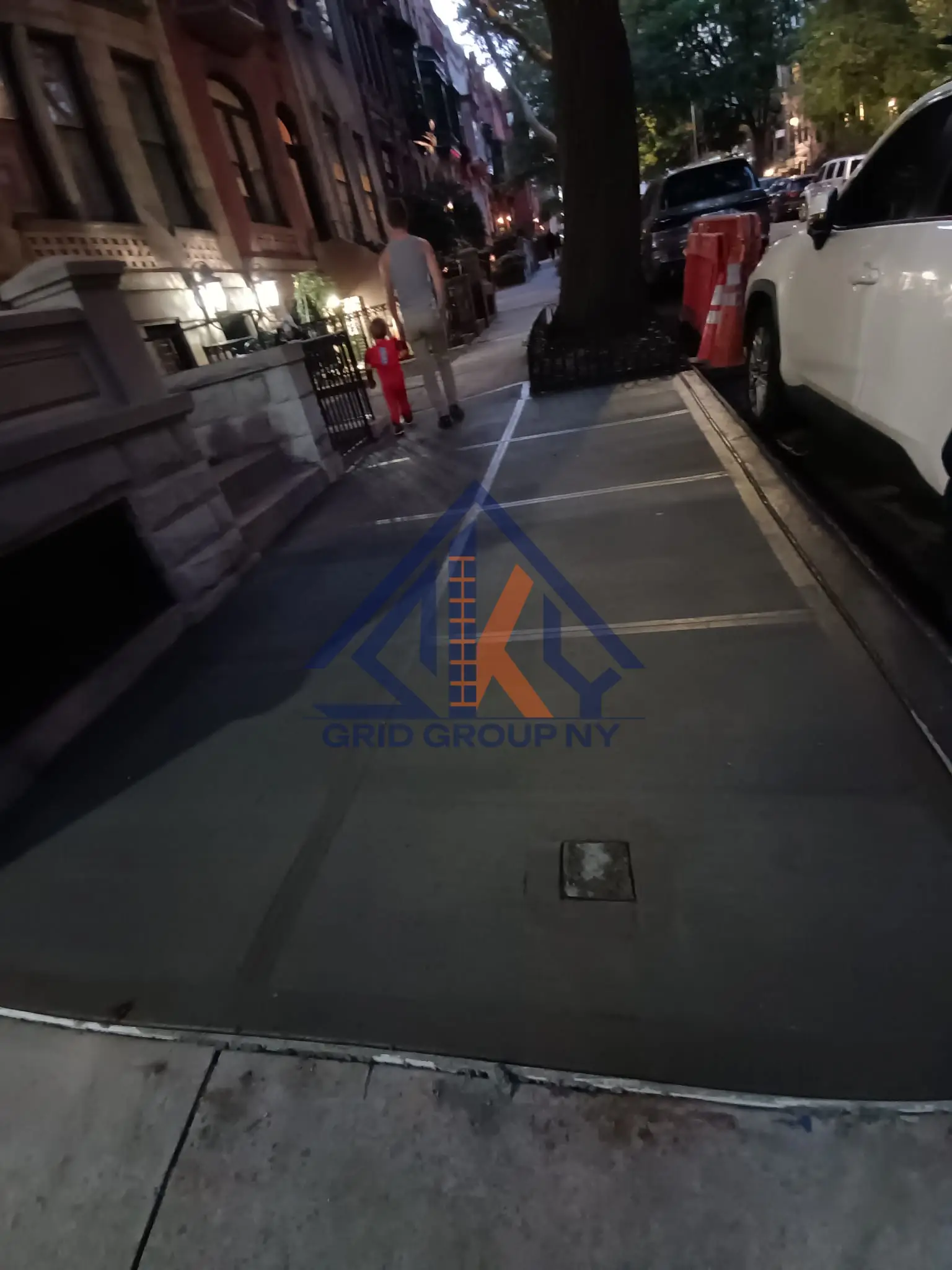
Day two covered the pour and finishing. New flags were placed and finished to match the grade of the adjoining sidewalk and the neighboring properties. Expansion joints went in where DOT expects them. The DOT dismissal checklist calls for joints at least every 20 linear feet at each property line and where the curb meets the sidewalk, installed, sealed, and level with the surface.
Row house blocks leave little room to work. Neighbors share stoops and walls, residents come and go all day, and parking is tight. The crew staged materials to keep a safe walking route open, kept the work zone tidy, and limited disruption to the residents and the buildings on either side. The new concrete was left to cure before the frontage reopened to normal foot traffic.
Where the $6,700 Went
| Item | Cost |
|---|---|
| DOT Sidewalk Construction/Repair Permit | $70 |
| Sidewalk Closing Permit | $70 |
| NYC Parks Tree Work Permit | Free |
| 811 Utility Mark-Out Ticket | Free |
| Demolition, base preparation, and replacement of 8 flags | $6,560 |
| Estimated total | About $6,700 |
Work near mature tree roots usually costs more per flag than a straightforward replacement. Hand digging around roots, extra base material, and protecting the tree all add labor, which is part of why a root-related job on a Harlem block can run higher than open-sidewalk work in other parts of the city.
Clearing the Violation From the Record
Finished concrete doesn't remove a violation on its own. The owner or contractor has to request a dismissal inspection through 311, asking for a "Sidewalk Violation Dismissal Request." DOT's checklist asks for the permit number, property address, block and lot, Notice of Violation number, and contact information. The entire sidewalk also needs to be visible for the inspector, so nothing should be stored or parked on the frontage that day.
We handled the dismissal request on the owner's behalf once the work was complete, so the violation could be cleared from the property record. An open violation can complicate a future sale or refinance, which makes this final step just as important as the concrete work.
What the Owner Got
All 8 deteriorated flags along the frontage of 136 W 131st St were replaced with new concrete built to DOT specifications. The raised edges and cracked sections that created trip hazards are gone, and residents now have an even walking surface outside a building that has stood on this block since 1910. The street tree that contributed to the damage remains in place, and the repair was planned around it rather than at its expense.
Facing a DOT Sidewalk Violation on Your Harlem Property?
If roots, weather, or age have left your sidewalk cracked or uneven and a DOT notice has arrived, the 75-day clock is already running. Sky Grid Group NY handles the full process, from reading your inspection report and securing DOT and Parks approvals to replacing the marked flags and requesting the dismissal inspection. See our sidewalk repair services in Manhattan.
Call us at (718) 814-1129 to request a free estimate for your Central Harlem or Upper Manhattan property.