

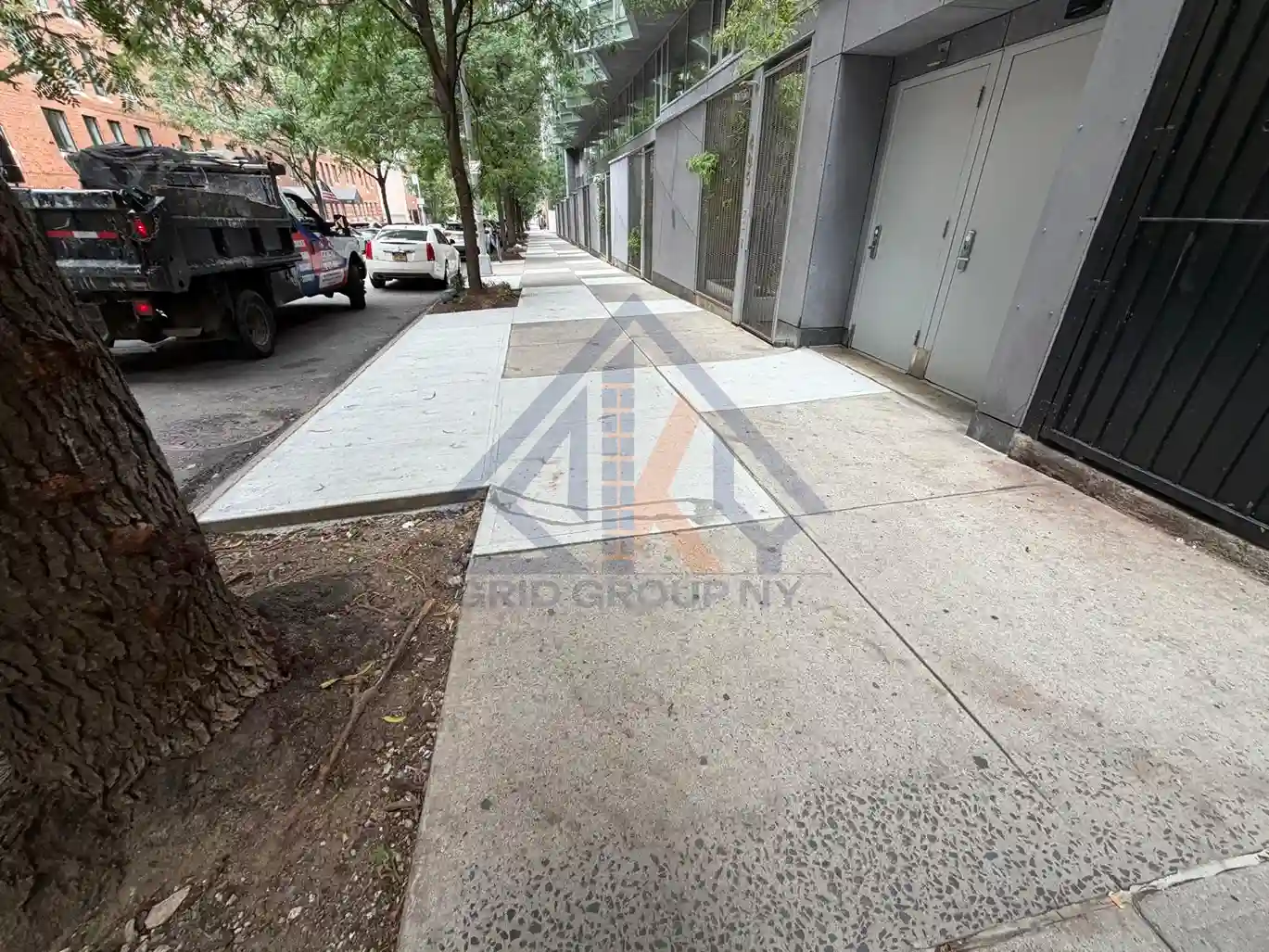
If you need to know whether a New York City property has a sidewalk violation, start with the city’s public violations dataset and search by address. Then call NYC311 to confirm what the record means. The dataset can point you to a violation, but NYC311 is where you get the status and a copy of the notice.
Start With What’s in Your Hands
Before you search, collect three things.
The address and borough. Use the exact house number, street name, and borough from the notice. The dataset keeps the house number and street name in separate fields. Violation numbers also run in sequence within each borough, so a number without its borough can lead you to the wrong record.
The violation number. It’s printed on the Notice of Sidewalk Violation. NYC311 says it has 4 to 6 digits, such as 1432 or 31221. The dataset calls it swv_number.
The borough, block, and lot (BBL), if you can find it. This is the city’s way of naming one specific property. NYC311 links to a Department of Finance tool that returns the BBL for an address, and DOT asks for the block and lot when you schedule a dismissal inspection. Don’t use the BBL to search the dataset, though. The dataset’s BBLID field points to an entry in a lot table. It isn’t the BBL itself.
Four Official Places to Look
Each city resource covers a different piece of the picture.
-
NYC Open Data, “Sidewalk Management Database – Violations.” Search with a house number and street name. You’ll see the violation number, issue date, notice dates, dismissal date, and defect types. It has no status column and no borough column.
-
NYC311 violation inquiry. Use this to follow up on a violation or lien and to request a copy. It requires the violation number.
-
NYC311 “Sidewalk Violation Search.” Use this when you think a violation was issued correctly or incorrectly for an address. It’s handled by phone.
-
DOT’s permit search at nycstreets.net. Search by address or area to see permits DOT has issued. This shows permits only, not violations.
DOT’s own sidewalks page doesn’t offer an address search. It directs people to NYC311 for status and copies.
How to Run the Dataset Search
DOT publishes this dataset and refreshes it every day. To search through it follow these steps:
-
Open NYC Open Data and find “Sidewalk Management Database – Violations.”
-
Make sure DOT is the publisher, and note when the data was last updated.
-
Filter house_num and onstname with the house number and street name.
-
Open each row that matches and review swv_number, vissuedate, and vdismissdate.
-
Check which defect fields are flagged.
-
Keep a record: save the row, write down the date, and take a screenshot.
Reading the Columns
-
vissuedate is when the violation was issued.
-
certi_date is when the owner got the notice by certified mail.
-
post_date is when the notice was posted on the tax lot.
-
grace_pd is how many days pass after the owner receives the notice before the City can do the repair.
-
vdismissdate is when the violation was dismissed.
-
sq_feet is the total area of defective sidewalk.
-
trip_haz, undermined, slope, and broken are yes/no flags for a trip hazard, a void under the slab, improper slope, and a broken sidewalk.
Why You Can’t Trust a Blank Dismissal Date
There’s no “status” field. If the dismissal date is empty, that doesn’t prove the violation is still open. If it’s filled in, that’s just one data point. Use the dataset to find the record, and let NYC311 tell you where it stands.
Getting the Current Status or a Copy
NYC311 can follow up with DOT on an existing violation or lien and request a copy of the notice. Keep the violation number and property address handy. NYC311 lists this as “Request status or a copy of a sidewalk violation” but doesn’t publish a dedicated form or phone number for it, so begin at NYC311 itself.
DOT also publishes an inspection dataset. It logs inspector visits, including whether a visit found no defects or led to a canceled violation. Its published fields don’t include a violation number, so you can’t tie a row to a particular notice. A single inspection is also just one visit. It doesn’t show that a property is free of violations.
Permits work the same way. A permit shows that repair work was authorized, not that the violation has been dismissed.
If the Search Comes Back Empty
Don’t read an empty result as a clean bill of health. Here are the usual explanations:
-
The house number or street name is written differently from how DOT stored it.
-
You picked the wrong borough.
-
The notice went to the wrong property, so it doesn’t match the inspection report.
-
The sidewalk is damaged but no notice has been issued yet.
Recheck the spelling, address, and borough, then call 311. If you suspect a notice went to the wrong property, ask for “Sidewalk Violation Search.” If the notice details don’t match the inspection report, NYC311 handles the appeal.
What the Violation Actually Says
A sidewalk violation is DOT’s official notice that the sidewalk beside a property is defective, and the owner is responsible for fixing it. The deadline to resolve this is 75 days that start from the day you receive the notice. The dataset tracks problems like broken or missing flags, trip hazards, undermined flags with a void, improper slope, defective hardware, patchwork, and structural issues. DOT’s guide counts a vertical gap of 1/2 inch or more between flags as a trip hazard.
How to Clear a Sidewalk Violation
Fix the sidewalk to DOT’s specifications under a permit, then request a dismissal inspection through NYC311. The inspector confirms the work, and the violation is removed. Here’s the sequence:
-
Obtain the sidewalk permit.
-
Remove the defects.
-
Install, seal, and level expansion joints every 20 linear feet, at each property line, and where the curb meets the sidewalk.
-
Add detectable warning surfaces on any pedestrian ramp you repair.
-
Keep the entire sidewalk visible for the inspection.
-
Call 311 and provide your permit number, address, block and lot, violation number, and email.
Navigating all of the steps above is overwhelming for owners, but not for our licensed sidewalk contractors at SKYGRID GROUP NY.
With more than 30 years of experience resolving sidewalk violations across New York City, handling permits, and coordinating dismissal inspections, we know what DOT expects and how to get the repair done right the first time. That means fewer delays, no missed deadlines, and no guesswork on your end.
If you’re holding a notice and don’t know what the repair will take, SKY GRID GROUP NY can review it and give you a written quote. Contact us today to get a free estimate and schedule your sidewalk assessment with our experienced team.